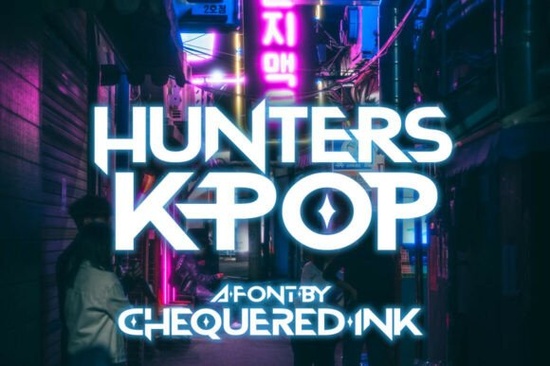
If you are looking for a typeface that captures the sharp, energetic feel of modern Korean pop and electronic music, Hunters K-pop Font delivers exactly that. Designers and small shop owners often struggle to find lettering that feels bold enough for merch but clean enough to stay readable on screens. This specific display typeface solves that problem by balancing aggressive geometry with open spacing. Whether you are drafting album art, building streaming overlays, or printing fan apparel, the straight cuts and hollowed counters give your layouts a distinct edge without overwhelming the composition.
What makes this typeface work so well for music and digital projects?
The structure relies on clean, geometric strokes and intentional negative space inside each letter. Those open counters improve legibility when you shrink graphics for social thumbnails or expand them for large banners. The sharp terminals mimic the precision of synthesizer waveforms, which explains why producers keep this style trending across streaming platforms. When you need a layout that feels fast-paced, the angular shapes naturally draw the eye forward. This works especially well when you want your artwork to stand out in crowded marketplaces.
Small business owners also appreciate how quickly it adapts to different mediums. You can layer it behind subtle gradients for a digital glow, or cut it directly into vinyl for physical merchandise. The uniform weight means you rarely need to manually adjust tracking when printing at smaller sizes. If you pair it with simple geometric icons or minimal color palettes, the result looks intentional and polished.
How should I pair this with other lettering styles for balanced layouts?
Strong display letters rarely work best alone. Mixing angular headers with softer supporting text creates visual rhythm and keeps viewers engaged. For event posters, try placing the sharp header alongside a rounded sans serif or a light handwritten script. The contrast between rigid shapes and organic strokes guides the reader through your hierarchy without causing fatigue.
- Event flyers: Use the bold title for the main act, then switch to a neutral font for dates and venue details.
- Streaming overlays: Apply it to short phrases like “Live Now” while keeping chat boxes in a plain typeface for quick scanning.
- Packaging: Print the main logo on the front, reserving simpler letters for care instructions on the back.
If you want to explore similar display options, compare how the Retro Holly typeface handles vintage spacing, or how the Jake display style manages heavier weights. When you need something softer for balance, the Groovy Cute options pair nicely with rigid headers, while the Hello Angela script adds a human touch. For experimental collages, the Groovy Melt lettering introduces fluid distortion that contrasts well with sharp geometric cuts.
What licensing and installation steps should beginners follow?
Before applying any new typeface to commercial projects, always review the specific terms provided by the creator. Most display fonts include clear guidelines for print runs, digital usage, and merchandise limits. Keep your download folder organized, and install both the OTF and TTF versions to cover different software requirements. Mac users can rely on the built-in font manager, while Windows users typically double-click the file to install.
For Hunters K-pop Font, save a copy of your license receipt in the same project folder as your design files. This small step saves hours if a marketplace requests proof of commercial rights. Also, test your final artwork on multiple screens before publishing, since contrast and compression can shift how sharp edges appear online.
Which settings give the cleanest output for print and screens?
Digital projects perform best with scalable vectors or high-resolution PNG exports. When working in raster programs, set your canvas to 300 DPI for print-ready items and keep the text layer editable until final export. This preserves crisp corners and prevents accidental pixelation along the straight cuts. If you use Photoshop, Illustrator, Canva, or Silhouette Studio, the type will map cleanly as long as you avoid excessive effects that might fill the open counters.
Convert text to paths before sending to vinyl plotters. This locks the geometry and stops machines from closing the gaps. Always preview the cut lines on screen, and run a small test on scrap material before committing to a full batch. Consistent proofing reduces waste and keeps your shop margins healthy.
What should you check right before hitting publish?
- Verify your commercial license covers print, digital, and merchandise.
- Test legibility on both light and dark backgrounds.
- Convert text to outlines before sending to cutting machines.
- Save an editable master and a flattened export for every project.
- Keep a folder with licenses, downloads, and source files.
Set up your workspace and records now to save hours during busy launch seasons. Start with a simple poster or overlay, adjust the spacing to match your grid, and iterate until the rhythm feels right. Your layouts will stay sharp, your workflow will stay organized, and your audience will notice the consistent visual tone across every release.
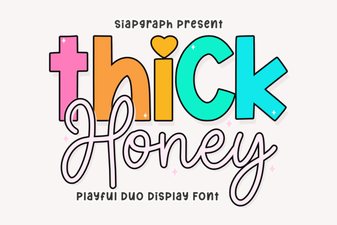 Thick Honey Duo Font: Style & Usability Guide
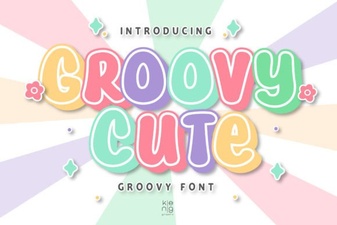 Groovy & Cute Fonts for Fun, Friendly Designs
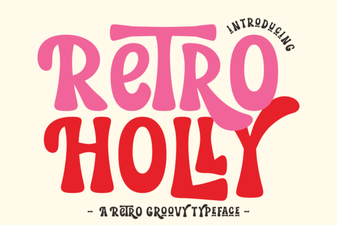 Retro Holly Font: Creative Design Styles & Ideas
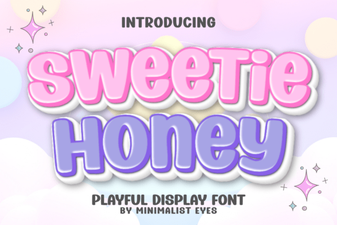 Sweetie Honey Font for Cozy Project Designs
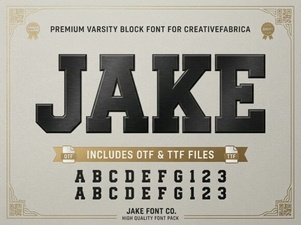 Discover Jake Font for Creative Design Projects
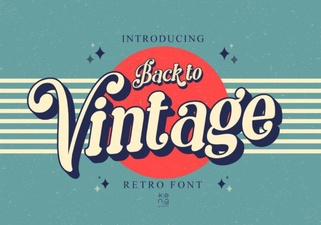 Reviving Vintage Fonts for Modern Design Projects