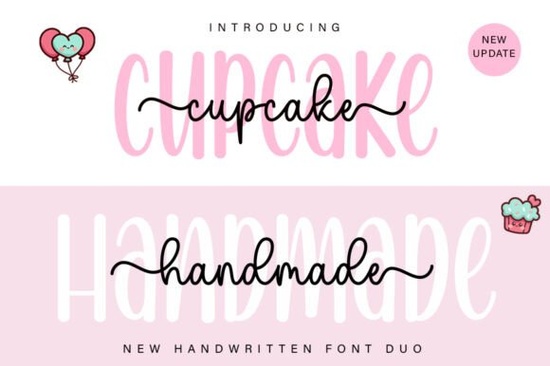
If you need a typeface that balances modern clarity with a soft, handwritten feel for wedding invites, boutique packaging, or blog headers, this Cupcake Handmade Duo Font gives you two coordinated styles in a single download. Pairing a clean sans serif with a flowing script is a reliable way to keep layouts readable while adding personality. Small business owners and POD sellers use this combination to make product labels, greeting cards, and social media posts look professionally designed without needing to juggle multiple independent files. Designers and creative hobbyists appreciate having both weights ready for fast mockups and client presentations.
How does a script and sans serif pairing improve everyday layouts?
When you place a delicate cursive accent next to a neutral sans serif, the eye naturally moves from the main headline to the supporting details. The handwritten portion draws attention for short phrases, while the simpler style keeps paragraphs and subheadings crisp. This contrast reduces visual fatigue, especially on small print runs like stickers, thank-you tags, or mobile screens. Crafters who sell digital downloads or physical items online often rely on this structure because it scales cleanly across different formats. You can swap between the two weights depending on whether your project needs visual emphasis or a straightforward information block.
If you prefer something with sharper edges, exploring options like simple signature alternatives might fit minimalist branding better. On the other hand, if your target audience responds to nostalgic or retro aesthetics, checking out vintage-inspired pairings can help you match seasonal campaigns without breaking your visual consistency.
What practical steps make PUA encoding easier to work with?
PUA encoded simply means the special characters, swashes, and ligatures are mapped to standard keyboard locations instead of requiring complex Unicode strings. In programs like Cricut Design Space, Silhouette Studio, or Adobe Creative Cloud, this saves hours of manual alignment. You just open the character panel, select the extra glyphs, and drag them into place. This feature is especially useful for monogram logos, personalized gift tags, and custom signage where tight spacing matters. To get the most out of these hidden characters:
- Open the glyph or character panel in your software before you start typing.
- Scroll through the full character map to find alternate letters and decorative swashes.
- Drag the selected element directly onto your artboard, then resize it to match your baseline text.
- Check spacing carefully on test prints, as decorative tails may overlap if placed too close to cut lines or page edges.
If you are building a complete brand suite, you might also compare how other creators manage ligature connections with the bold retro script sets or the rounded, family-friendly pairings. Each style serves a different customer mood, but the workflow for managing extra glyphs stays exactly the same across most design platforms.
Which print-on-demand items show these letterforms best?
The contrast between a clean geometric base and a flowing cursive accent works particularly well on products that require quick visual scanning. Think canvas tote bags, ceramic mugs, and apparel prints where bold text must remain legible from a distance. For paper goods like invitations or recipe cards, the script portion handles the recipient name or main title, while the sans serif carries dates, ingredients, or return addresses. You can layer these typefaces over textured backgrounds or solid pastels without losing clarity. Just remember to leave enough negative space around the cursive elements so the delicate curves do not blend into background patterns. Testing a physical proof on your actual material is the fastest way to catch issues with thin strokes disappearing on woven fabric or glossy coatings.
When you need to verify commercial licensing terms or review usage examples, the Cupcake Handmade Duo Font reference page outlines acceptable merchandise guidelines clearly. If you want to keep your shop inventory fresh, you can also browse the full script and pairing collection to find matching assets for your next seasonal drop.
What should I check before sending files to a printer?
Follow this quick workflow to avoid common production errors and keep your shop running smoothly:
- Install both the sans and script files in your system font folder to keep project paths organized.
- Use the script strictly for headings, names, or short accent phrases to maintain high readability.
- Maintain line spacing at roughly 1.3 times the font size when pairing these styles on small retail tags.
- Export final artwork at 300 DPI for physical goods and run a small batch before committing to full inventory orders.
- Save your layouts as PDFs or flattened PNGs to prevent font substitution on customer devices.
Start with a muted color palette, drop your text onto a blank canvas, and adjust tracking until the cursive flows naturally into the block type. A quick home test print will confirm your spacing before you hand files off to production partners.
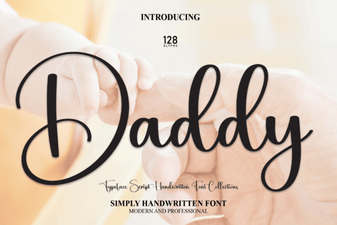 Daddy Font: Creative Uses in Design Projects
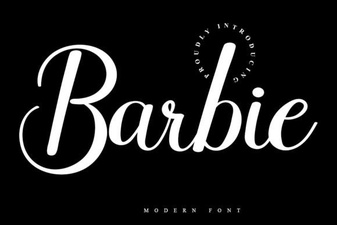 Font Files & Customizable Templates for Barbie Designs
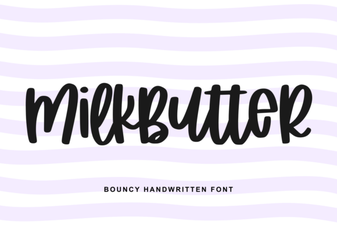 Milkbutter Font: Free Download & Creative Uses
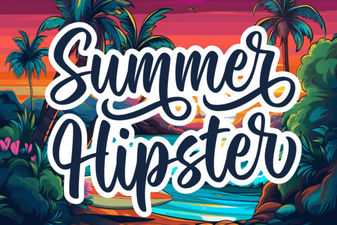 Designing with Summer Hipster Fonts
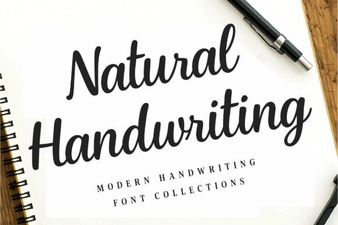 A Natural Handwriting Font for Digital Projects
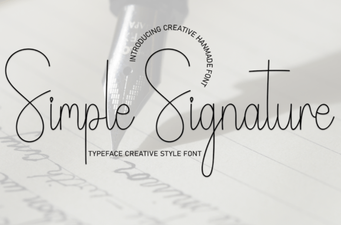 Refined Handwriting Styles for Every Creative Project