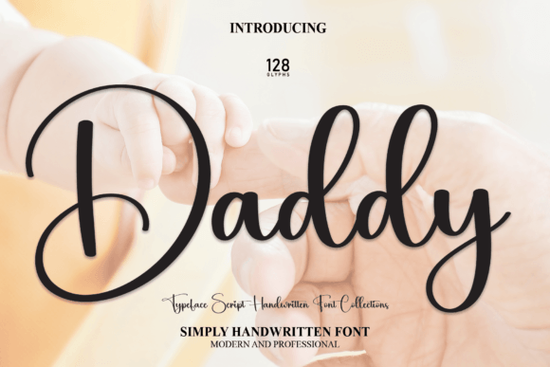
When you need a handwritten script that feels personal without looking overly formal, Daddy Font offers exactly that balance. It reads as a gentle, flowing cursive style that works well for wedding invitations, baby shower prints, boutique packaging, and digital stickers. The letterforms are carefully spaced so you do not need to worry about awkward overlaps, which saves time during the layout phase. If you want to see the full character set before purchasing, the original project page breaks down each alternate swash and spacing adjustment.
What makes this handwritten script work for everyday projects?
The main appeal of this typeface comes from its consistent stroke weight and soft curves. Many decorative scripts suffer from low legibility at smaller sizes, but this one maintains clear letter shapes even when scaled down for tags or social media graphics. You will notice how the natural slant guides the eye smoothly across short phrases, making it ideal for titles, quotes, or accent text. Crafters and small business owners often prefer it because it requires minimal tweaking in vector programs.
Designers frequently ask whether a script font can handle both light and bold pairings. This style sits comfortably in the middle of the spectrum, meaning it will not clash with clean sans serifs or playful display fonts. If you want to explore similar options, you might compare it with the handcrafted duo set we featured recently to see how paired weights behave in mockups. The gentle rhythm of the curves also works well when layered over soft textures or watercolor backgrounds, giving your layouts a warm, finished look.
How do I use it without making the layout feel too busy?
Scripts can quickly overwhelm a design if you use them for long paragraphs. Keep this typeface reserved for short headlines, product tags, or single-line quotes. When you pair it with a neutral body font, the script acts as a quiet accent rather than a visual wall. Adjusting the tracking slightly wider often helps prevent the tails from colliding, especially when working with all-lowercase titles. Many creators find that testing a few different point sizes on a white canvas quickly reveals which spacing feels the most comfortable.
Hobbyists also wonder about spacing when applying script typography to curved surfaces like mugs or t-shirts. A quick fix is to use your design software warp tool at a low percentage, then manually nudge the spacing on the outer letters so they follow the curve naturally. If you are experimenting with seasonal layouts, the relaxed summer typography collection offers a helpful comparison point for managing negative space in busy compositions. Keeping your margins generous will always protect the script from feeling cramped.
Is it safe for commercial projects and print-on-demand shops?
Yes, most script downloads from reputable marketplaces come with standard commercial licenses that cover physical goods, digital templates, and small-batch print orders. Always double-check the license file included in your download, because some creators require attribution or limit resale as a standalone digital product. For Etsy sellers and boutique printers, this means you can safely place the text on apparel, stationery, greeting cards, and packaging labels without extra paperwork. If you need more organic pairings for your storefront, the casual handwriting alternatives might provide additional layout ideas.
Which design formats benefit most from this style?
This typeface performs best in formats that allow the letters room to breathe. Wedding signage, nursery prints, bakery menus, and handmade product tags all rely on short phrases where a flowing script adds personality. Avoid using it for dense paragraphs or technical manuals, where a straightforward serif or sans serif will serve your readers better. When preparing files for production, always convert text to outlines or paths before sending to a printer or uploading to a POD platform. This prevents font substitution errors and keeps the curve details intact. You can always explore more variations of Daddy Font to compare ligatures and alternate characters before finalizing your layout.
When building a cohesive brand palette around soft, approachable typography, testing how different weights interact with backgrounds matters more than chasing trendy styles. Reviewing the smooth lettering options can show you how subtle thickness changes affect mockup presentations across different screen sizes. Once you understand how the font behaves at various scales, you will save hours of revision time.
Quick checklist before you send your design to print or publish
- Limit script usage to headlines, short quotes, or accent labels
- Pair with a high-contrast neutral font for body text
- Adjust letter spacing slightly to avoid overlapping tails
- Convert text to outlines before exporting final files
- Test print on your actual material to check legibility and contrast
- Keep a backup of the original license file in your project folder
Start with a simple layout, test your spacing at the intended print size, and adjust until the curves sit cleanly without touching. Apply this same spacing test to your next seasonal collection, and you will notice how consistent typography choices improve both readability and customer trust.
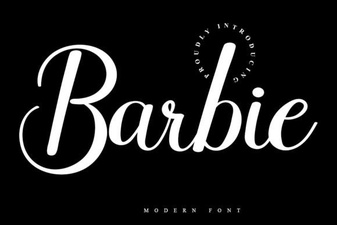 Font Files & Customizable Templates for Barbie Designs
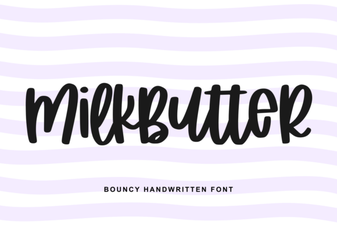 Milkbutter Font: Free Download & Creative Uses
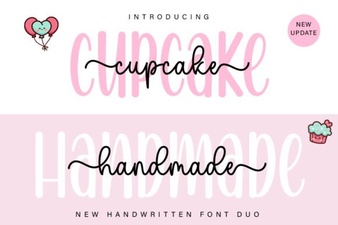 Cupcake Duo Font: Creative Typography for Design Projects
 Designing with Summer Hipster Fonts
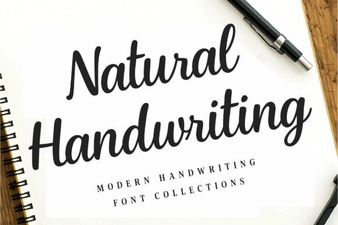 A Natural Handwriting Font for Digital Projects
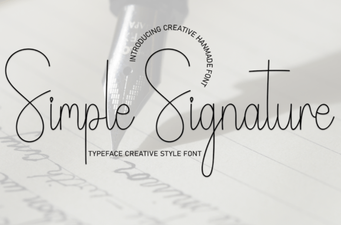 Refined Handwriting Styles for Every Creative Project